How to prepare for an interview: a practical checklist (South Africa)
Use this South African interview preparation checklist to plan what to wear, what to take, and how to avoid transport and admin surprises on the day.
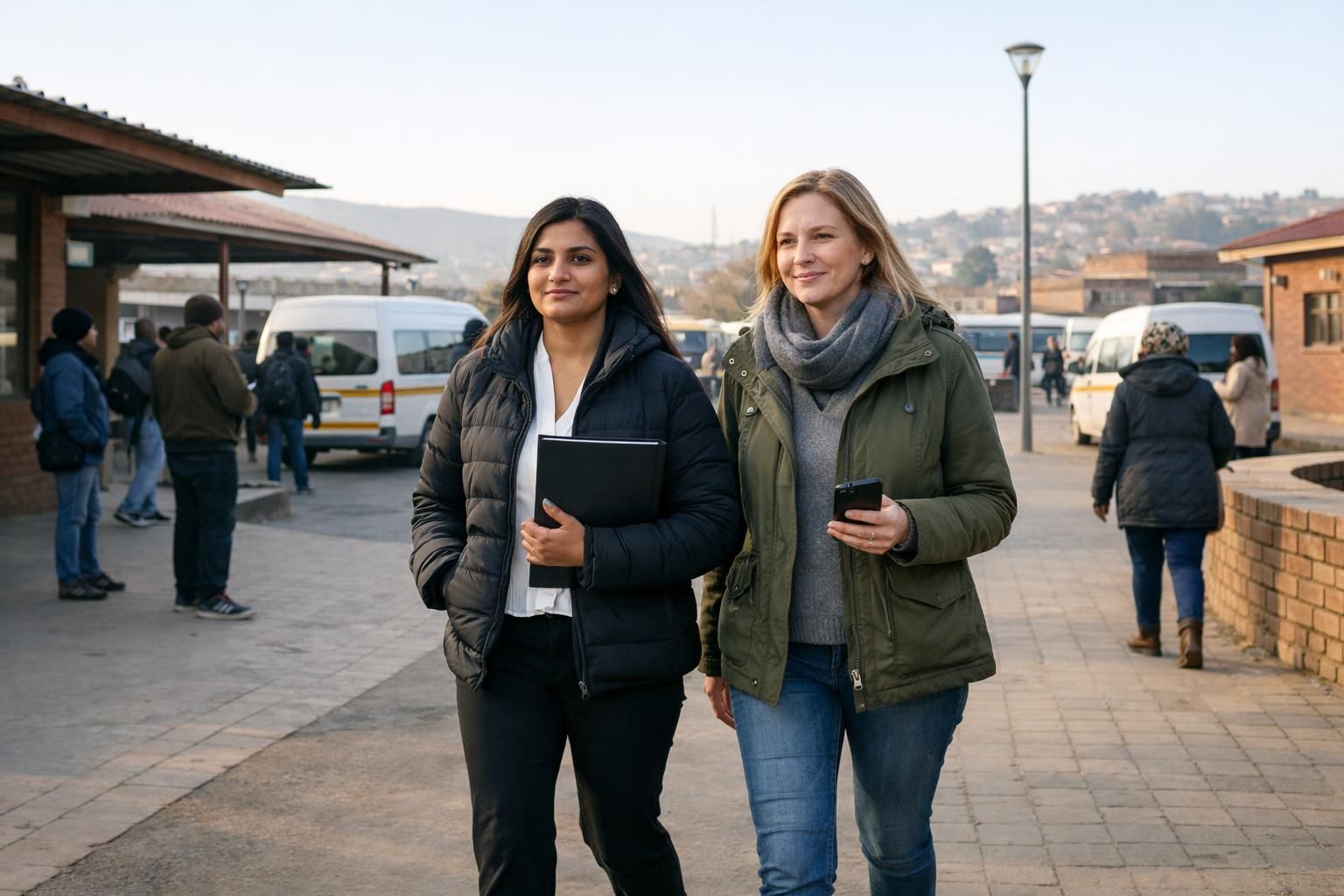
If you’re wondering how to prepare for an interview, keep it simple: confirm the details, research the role, practise your answers, plan your outfit, and pack what you’ll take the night before.
The goal is to arrive calm and on time, with the right documents, a charged phone, and a few ready examples that prove you can do the work. This checklist is built for real life in South Africa: WhatsApp invites, taxi routes, load-shedding, and walk-in receptions.
Before you start preparing, make sure your CV matches what you’re about to say in the interview. If you need to fix it quickly, update your CV profile and save a clean version to send.
Why interview prep goes wrong (and how to stop it)
Most people don’t lose interviews because they’re not good enough. They lose them because of small preventable issues that make them look unprepared or unreliable.
- Unclear logistics: wrong address, wrong entrance, wrong time zone for a virtual interview, or arriving late because you guessed the transport time.
- Weak examples: you talk generally about being “hardworking” but you don’t give proof (numbers, results, or a clear story).
- Paperwork surprises: you’re asked for ID, certificates, or proof of work, and you have nothing with you.
- Presentation issues: you dress too casually for the workplace, or you look uncomfortable and distracted because you didn’t plan.
Good preparation fixes all of this. It also makes you less nervous, because you’ll know exactly what you’re walking into.
Interview preparation checklist: 24–48 hours before
Use this as your main interview preparation checklist and tick it off. You don’t need to do everything perfectly—you just need to remove the obvious risks.
- Confirm the basics: date, time, location (or video link), interviewer name, and how long it will be.
- Confirm the format: in-person, phone call, panel, task/assessment, or a mix.
- Save the proof: screenshot the invite, save the email/WhatsApp message, and pin it so you can find it fast.
- Research the employer: what they do, who they serve, and what the role is responsible for (use the job ad wording).
- Match your experience to the role: pick 3–5 examples you’ll reuse for multiple questions (projects, part-time work, volunteering, campus leadership, group assignments).
- Practise the top questions: tell me about yourself, why this role, strengths/weaknesses, conflict, and a time you solved a problem.
- Prepare your questions: 3 questions that show you’re serious (more below).
- Plan transport: route, cost, and a backup plan if taxis or buses are delayed.
- Plan around load-shedding/data: charge devices, buy data if needed, and have a quiet spot for online interviews.
If you haven’t done your CV recently, do a quick alignment check: your CV, LinkedIn (if you use it), and what you say in the interview should match. You can choose a CV design and export a neat PDF so your documents look consistent.
What to take to an interview (South Africa): pack the night before
People often ask what to take to an interview. The safest approach is to pack a small “interview folder” the night before, even if the employer didn’t ask. Keep it simple and tidy.
Your documents
- CV copies: 2–3 printed copies (A4), plus a PDF on your phone.
- ID document/card: original if possible (or at least a clear copy).
- Certificates: highest qualification, short courses, and any licence relevant to the role (originals or copies).
- Academic record: helpful for graduates if requested.
- References list: names, roles, phone numbers, and emails (don’t bring reference letters unless asked).
Practical essentials
- Notebook + pen: for names, next steps, and questions you want to ask.
- Fully charged phone: and a charger/power bank if you have one.
- Data/airtime: especially if you’re relying on maps, ride apps, or a video call.
- Directions: saved offline or written down (reception names, building floor, entrance instructions).
- Small money buffer: for transport delays, parking, or an unexpected return route.
If it’s a virtual interview
- Headphones with a mic (if you have them) to cut background noise.
- A quiet space plan: tell people at home you need 30–60 minutes uninterrupted.
- Backup option: if the video fails, be ready to switch to a phone call quickly.
If you need to quickly generate an extra copy of your CV or fix a formatting issue, log in to CV Hub and download the latest version rather than sending an old file from your phone.
What to wear: simple, role-appropriate, and comfortable
What you wear doesn’t need to be expensive. It needs to be clean, neat, and aligned with the workplace. If you’re unsure, rather be slightly more formal than too casual.
- Office/admin/call centre: plain shirt or blouse, dark jeans or trousers (no rips), closed shoes if possible.
- Retail/hospitality: neat and practical; avoid loud prints; shoes you can stand in.
- Trade/technical roles: clean, smart-casual; you can mention safety gear experience, but don’t arrive in dirty workwear.
- Graduate/professional: simple business attire if you have it; otherwise smart-casual done well.
Quick check: try the outfit on the day before. Make sure you can sit comfortably, walk easily, and you’re not constantly adjusting your clothes.
A copy-and-adapt prep script: your 60-second intro + 5 proof stories
You don’t need to memorise long answers. You need a few flexible blocks you can adapt. Use the script below and replace the brackets.
1) Your 60-second “Tell me about yourself”
Copy and adapt:
“I’m a [your role/field] with a background in [qualification or main experience]. Recently I worked on [project/job/volunteer work] where I [what you did] and achieved [result]. I’m applying for this [job title] because it matches my strengths in [2 relevant skills], and I’m keen to grow in [industry/area].”
2) Prepare 5 proof stories (use this structure)
Use the same structure each time: Situation → Task → Action → Result.
- Customer service story: “A customer was unhappy because… I… The result was…”
- Teamwork story: “Our group was stuck because… I helped by… We finished by…”
- Problem-solving story: “Something went wrong when… I investigated… I fixed it by…”
- Learning fast story: “I didn’t know… so I learned by… Then I…”
- Reliability story: “We were short-staffed / deadlines were tight… I…”
Tip: if you have little work experience, use assignments, community projects, society roles, church/NGO volunteering, or helping in a family business. Employers mainly want proof you can show up, learn, and deliver.
Questions you should ask (so you don’t sound passive)
Asking good questions shows you understand the role and you’re thinking ahead. Pick 2–3, not 10.
- “What does success look like in the first 30–60 days in this role?”
- “What are the busiest times of the month/week for this team?”
- “What systems or tools will I use most?”
- “What are the next steps and when should I expect feedback?”
If you’re a graduate or entry-level applicant, this pairs well with a tight CV. If you still need one, see our guide: Graduate CV: example and template for South Africa (even with no experience).
Day-of plan: timing, transport, and calm nerves
- Arrive early: aim to be in the area 20–30 minutes early. Use the extra time to breathe, review your notes, and compose yourself.
- Phone on silent: before you enter the building or start the call.
- Reception moment counts: greet politely, give your name clearly, and wait patiently. People notice.
- Breathing reset: inhale slowly, exhale longer than you inhale, repeat 3 times. It helps your voice sound steadier.
If something goes wrong (taxi delay, wrong entrance, network issues), message or call as soon as you know. A calm update is better than disappearing.
Common interview prep mistakes (quick fix list)
- Talking without examples: fix it by preparing 5 proof stories (above).
- Not knowing the job ad: re-read it and highlight the top 5 requirements; match each to an example.
- Over-sharing personal details: keep it professional—focus on work, study, and skills.
- Bad file hygiene: rename your CV file to Name_Surname_CV.pdf and keep it easy to find.
- No plan for documents: pack your folder the night before.
- Winging transport: do a route test if you can, or plan a backup route.
Your next step
The most important takeaway on how to prepare for an interview is this: remove preventable stress (documents, transport, outfit) so you can focus on showing your strengths with clear examples.
If you want a quick win before your interview, create a free CV (or update your CV profile) so your CV matches your interview story. For more practical help, browse more CV and job search advice, and if you have questions about the platform you can read the CV Hub FAQ or contact CV Hub.
If you’d like to know who we are and what CV Hub does, see about CV Hub.