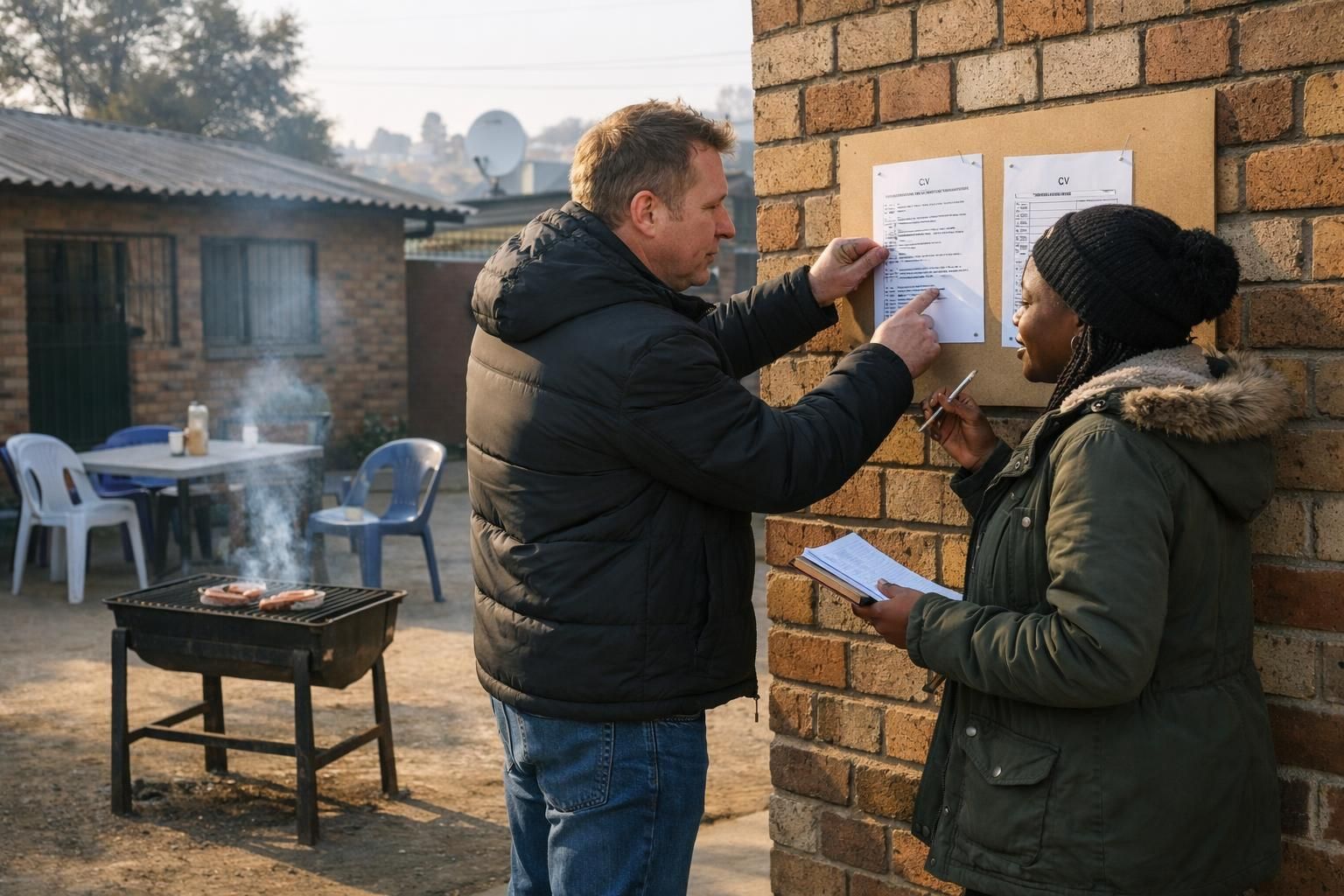
How to apply for a learnership: step-by-step (South Africa)
A practical, end-to-end guide on how to apply for a learnership in South Africa: where to find opportunities, requirements, documents, a copy-and-paste email/WhatsApp message, and what happens after you apply.

If you’re looking for how to apply for a learnership, the process is usually the same across most learnerships South Africa offers: find a legitimate opportunity, check the learnership requirements, prepare your documents (CV, certified copies, and a short motivation), apply exactly as instructed, then follow up and wait for screening, assessments, and interviews. Below is the full end-to-end process, with copy-and-paste templates you can use.
1) What a learnership is (and what the application is really for)
A learnership is a structured programme that combines workplace experience with a registered qualification. When you apply, the employer or training provider is mainly checking three things:
- Eligibility: you meet the minimum requirements (age range if stated, citizenship/residency, education level, location, driver’s licence if needed).
- Readiness: you can commit to the schedule, attend training, and show up consistently.
- Fit: you have a genuine interest in the field and basic skills that match the role.
Your goal is to make it easy for them to say “yes” by submitting a clean, relevant CV and the exact documents requested—no missing pages, no unclear scans, no messy file names.
2) Where to find legitimate learnerships in South Africa
Most learnerships are advertised through employers, training providers, and sometimes community channels. Use multiple sources and keep a simple tracker (date, closing date, how you applied, reference number).
- Employer career pages and social pages: check companies in your area or industry.
- TVET colleges and training centres: notice boards, student offices, and placement departments.
- Community groups: local WhatsApp/Telegram groups can be useful, but always verify details.
- CV platforms and databases: keep a searchable CV ready so you can apply fast. You can create a free CV and keep it updated in one place.
Red flags: avoid “application fees”, requests for bank PINs/OTPs, or pressure to pay someone to “secure a spot”. A legitimate programme may ask you to submit documents and complete assessments—but not to pay to apply.
3) Typical learnership requirements (what to check before you apply)
Learnership requirements differ, but most adverts mention a mix of the below. Before you apply, quickly confirm you meet them and that you can prove it with documents.
- Education: often Grade 12/Matric; some require specific subjects (e.g., Maths, Accounting, English).
- Age / youth criteria: sometimes specified (for example, “18–35”). Only rely on what the advert states.
- Citizenship/residency: commonly South African ID required.
- Location: you may need to live in a specific province/municipality or be willing to relocate.
- Computer skills: basic MS Office/email; sometimes typing speed for admin roles.
- Driver’s licence: for field-based roles (sales, technical support, site work).
If you’re missing one requirement, don’t guess. Either (1) apply only if the advert says “advantageous” rather than “required”, or (2) focus on other learnerships where you clearly qualify.
4) Documents you usually need (and how to prepare them properly)
Many candidates are rejected for avoidable document issues. Use this checklist and submit exactly what’s requested—no more, no less.
- CV: 1–2 pages for most entry-level applicants, tailored to the learnership.
- Certified copy of ID: clear scan/photo. Make sure both sides are included if applicable.
- Certified copies of qualifications: Matric certificate and any tertiary results/short courses.
- Academic record: if they ask for it (often for graduates).
- Proof of address: sometimes requested for region-based programmes.
Practical tips:
- File names: use a clear format like Surname_Name_Learnership_CV.pdf and Surname_Name_ID.pdf.
- PDFs are safest: convert photos to a single PDF per document type if possible.
- Quality check: open every file before sending—confirm it’s readable and the right document.
If you need to quickly refresh your CV layout and sections, choose a CV design that stays neat when printed or viewed on a phone.
5) Build a learnership CV that gets shortlisted (simple structure)
Your learnership CV should be easy to scan in 30–60 seconds. Keep it relevant to the programme and focus on potential and reliability.
Recommended CV sections
- Header: name, location, phone, email. (Only add ID number if explicitly requested.)
- Profile (3–4 lines): what you’re applying for + strengths + availability.
- Education: Matric + subjects if relevant; tertiary modules if applicable.
- Skills: communication, computer skills, customer service, numeracy, teamwork.
- Experience: any part-time work, volunteering, school leadership, community work.
- Certificates: short courses (First Aid, computer literacy, etc.).
- References: 1–2 people (teacher, supervisor, coach) with permission.
Already have a CV on CV Hub? Log in to CV Hub and update your CV profile before you apply so your latest info is ready.
6) Your motivation: what to write (and a copy-and-paste example)
Many learnership adverts ask for a “short motivation” or “cover letter”. Keep it straightforward: why this field, why you, and proof you’ll complete the programme.
Copy-and-paste motivation paragraph (edit the brackets)
Subject: Application for [Learnership name] – [Your full name]
Dear [Hiring Manager/Recruitment Team],
I am applying for the [Learnership name] because I want to build a career in [field/industry] and I’m ready to commit to both the training and workplace components. I have completed [Matric / qualification] and developed practical skills in [2–3 relevant skills: computer literacy, communication, teamwork, customer service] through [part-time work/volunteering/school projects]. I am reliable, willing to learn, and available to start on [date]. My CV and supporting documents are attached as requested.
Kind regards,[Your full name][Phone][Email][Location]
If you want a longer letter format, see our related guide: Learnership application letter: template + example (South Africa).
7) How to apply (email, online form, hand delivery, WhatsApp)
Always follow the method in the advert. If they say “online only”, don’t send emails. If they ask for one PDF, don’t send six separate images.
Email application checklist
- Subject line: include the learnership name and your full name.
- Attachments: include requested documents; keep file sizes reasonable.
- Body: paste your short motivation (don’t attach a blank email).
- Send to the correct address: double-check spelling.
Online form checklist
- Fill in fields exactly as your documents show (names, dates, IDs).
- Upload the correct file type and ensure every upload completes.
- Take screenshots or save the confirmation email/reference number.
Hand delivery checklist
- Use a neat envelope or folder with your name and the learnership reference.
- Include copies only (keep your originals at home).
- Ask for a stamp/signature on a copy of your cover page as proof of submission if possible.
WhatsApp application message (copy-and-paste)
Hello, my name is [Full name]. I’m applying for the [Learnership name]. I have attached my CV and supporting documents as requested. Please confirm receipt and advise if anything else is needed. Thank you.
8) What happens after you apply (and how to follow up politely)
After you submit, the usual steps are:
- Screening: checking minimum requirements and documents.
- Shortlisting: selecting candidates for the next stage.
- Assessments: sometimes numeracy/literacy, basic aptitude, or computer tests.
- Interview: focusing on motivation, reliability, and communication.
- Verification: document checks and references.
- Offer and onboarding: signing agreements and starting dates.
If the closing date has passed and you haven’t heard back after 10–15 working days (unless the advert states timelines), you can follow up once.
Follow-up email (copy-and-paste)
Subject: Follow-up: [Learnership name] application – [Your full name]
Dear [Name/Recruitment Team],
I hope you are well. I’m following up on my application for the [Learnership name] submitted on [date]. Could you please confirm whether my application was received and advise on the next steps or timelines?
Kind regards,[Your full name][Phone]
9) Common mistakes that get learnership applications rejected
- Missing documents (especially ID/qualifications) or unreadable scans.
- Not meeting the minimum requirements but applying anyway without addressing it.
- Generic CV with no link to the learnership field.
- Unprofessional email address or unreachable phone number.
- Wrong reference number or ignoring the application instructions.
- Long, unfocused motivation that doesn’t answer “why this learnership?”
If you want to make sure your CV is easy for employers to find, you can also browse the CV database to see how others structure theirs, then refine yours.
10) A worked example: applying for a Business Administration learnership
Use this as a complete example you can copy and adapt. Replace the brackets with your details.
Example CV profile (3–4 lines)
Profile: Entry-level candidate applying for a Business Administration learnership. Completed Matric in 2024 with strong English and Mathematical Literacy results. Comfortable with email, MS Word, and basic Excel. Reliable, organised, and available to start immediately; willing to commute within Johannesburg.
Example skills section
- Administrative support: filing, organising documents, data capturing (basic)
- Computer literacy: email, MS Word, basic Excel spreadsheets
- Customer service: polite communication, handling queries
- Strengths: punctual, accurate, willing to learn
Example motivation email (complete)
Subject: Application for Business Administration Learnership – Lerato Mokoena
Dear Recruitment Team,
I am applying for the Business Administration Learnership because I want to build a career in office administration and gain recognised workplace experience while completing a formal qualification. I completed Matric (2024) and have developed practical skills in computer literacy, communication, and organisation through supporting a community project where I helped with attendance registers, basic data capturing, and scheduling. I am reliable, willing to learn, and available to start on 1 October 2026. My CV, certified ID copy, and certified Matric certificate are attached as requested.
Kind regards,Lerato Mokoena071 234 5678lerato.mokoena@email.comBraamfontein, Johannesburg
11) Quick checklist before you press “send”
- I meet the stated learnership requirements.
- My CV is tailored to the learnership field (not generic).
- My ID and certificates are clear and correctly certified if required.
- My files are named clearly and open correctly.
- I used the correct email/portal and reference number.
- I saved proof of submission (email sent, screenshot, or reference number).
Need help fixing your CV before you apply?
If you get stuck, start by creating a free CV, then choose a CV design and update your CV profile with your latest education and skills. If you still have questions, you can read the CV Hub FAQ or contact CV Hub.